|
Machine Learning Algorithm and Theory
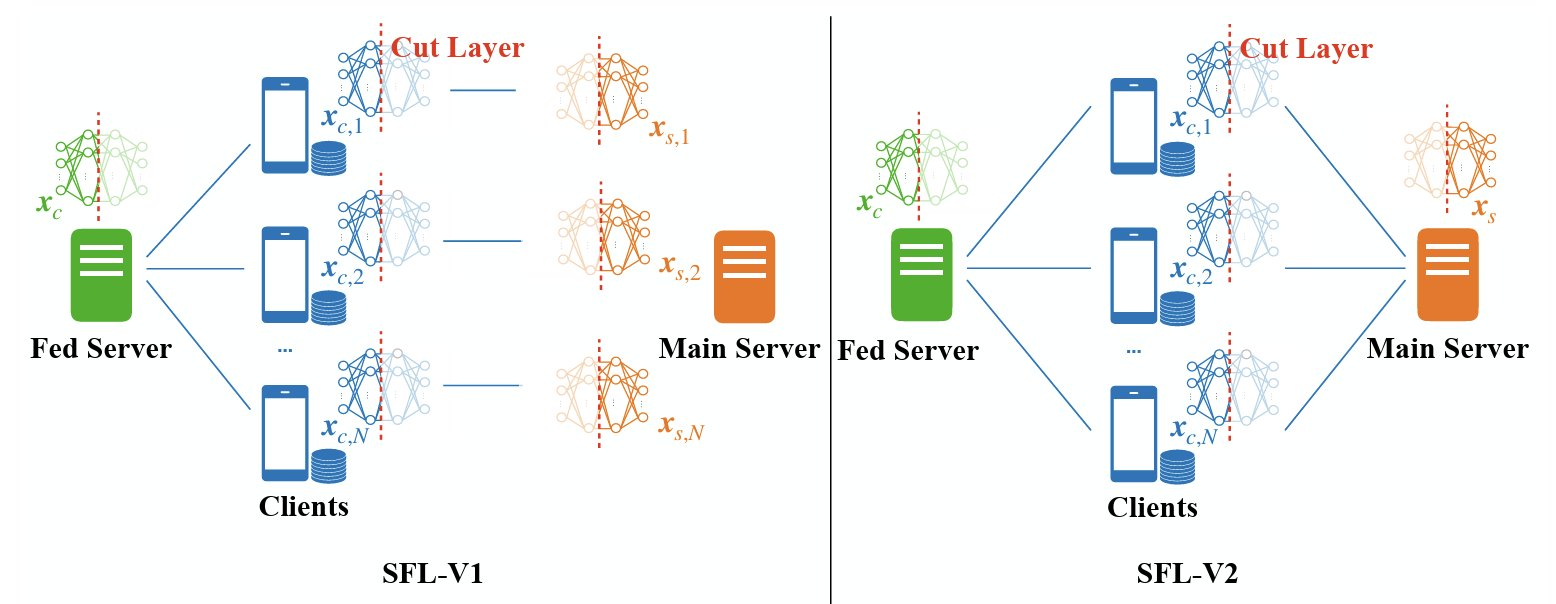
- Topic: Split Learning
- Motivation: Split learning enables privacy-preserving collaborative model training by splitting a neural network into several segments, where resource-constrained clients train only a segment of the neural network
- Research Question: Does split learning converge? If so, under what conditions?
- Highlight: We provided the first convergence analysis for split federated learning
- Publication: NeurIPS 2024.
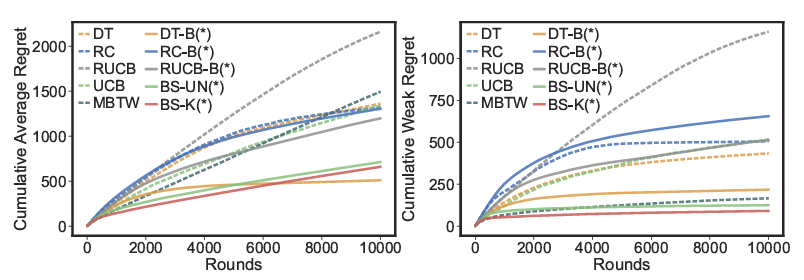
- Topic: Online Learning (dueling bandits)
- Motivation: The performance evaluation of various emgering LLMs replies on human feedback. However, human evaluations are naturally biased due to their heterogeneous background and the subjective nature of texts generated by LLMs.
- Research Question: How can we accurately evaluate the performance of LLMs when human feedback is biased and unknown?
- Highlight: We developed the first provable joint estimation of unknown LLM performance and human biase levels.
- Publication: NeurIPS 2025, spotlight.
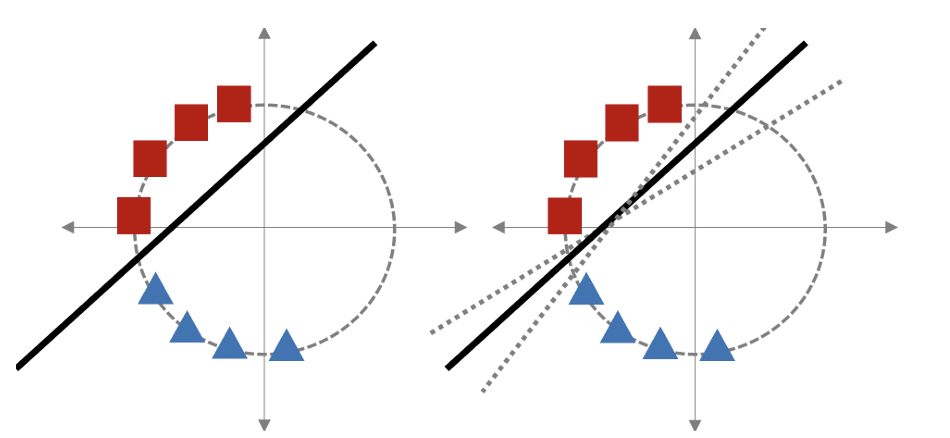
- Topic: Federated Learning
- Motivation: In federated learning, performance degrades severely under non-IID (heterogeneous) client data because local models drift toward different optima.
- Research Question: Can we make local training behave more like an IID setting?
- Highlight: We introduced FedUV, which promotes IID emulation during local training using two simple regularizers, i.e., classifier variance and hyperspherical uniformity.
- Publication: CVPR 2024.
Machine Learning for Health and Agriculture
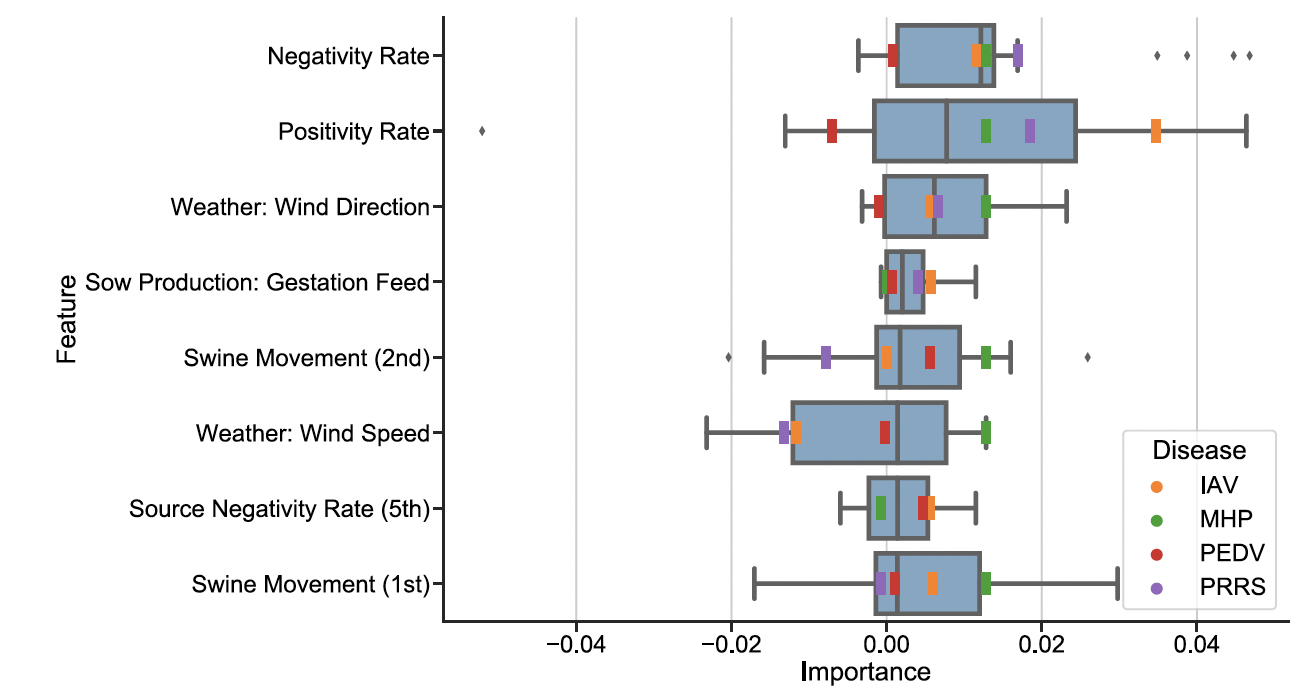
- Topic: Infection Prediction in Swine Populations
- Motivation: Disease outbreaks in swine production caused major losses (~10% of the U.S. pig population). The goal is an early-warning system that predicts daily infection risk so stakeholders can intervene earlier and mitigate outbreaks.
- Research Question: Can an ML model predict swine infection events on a daily basis and provide reliable advance warning?
- Highlight: Using data from over 200 farms, we developed ML models that output daily infection probabilities and can give 7-day and 30-day early warnings.
- Publication: Scientific Reports 2023.
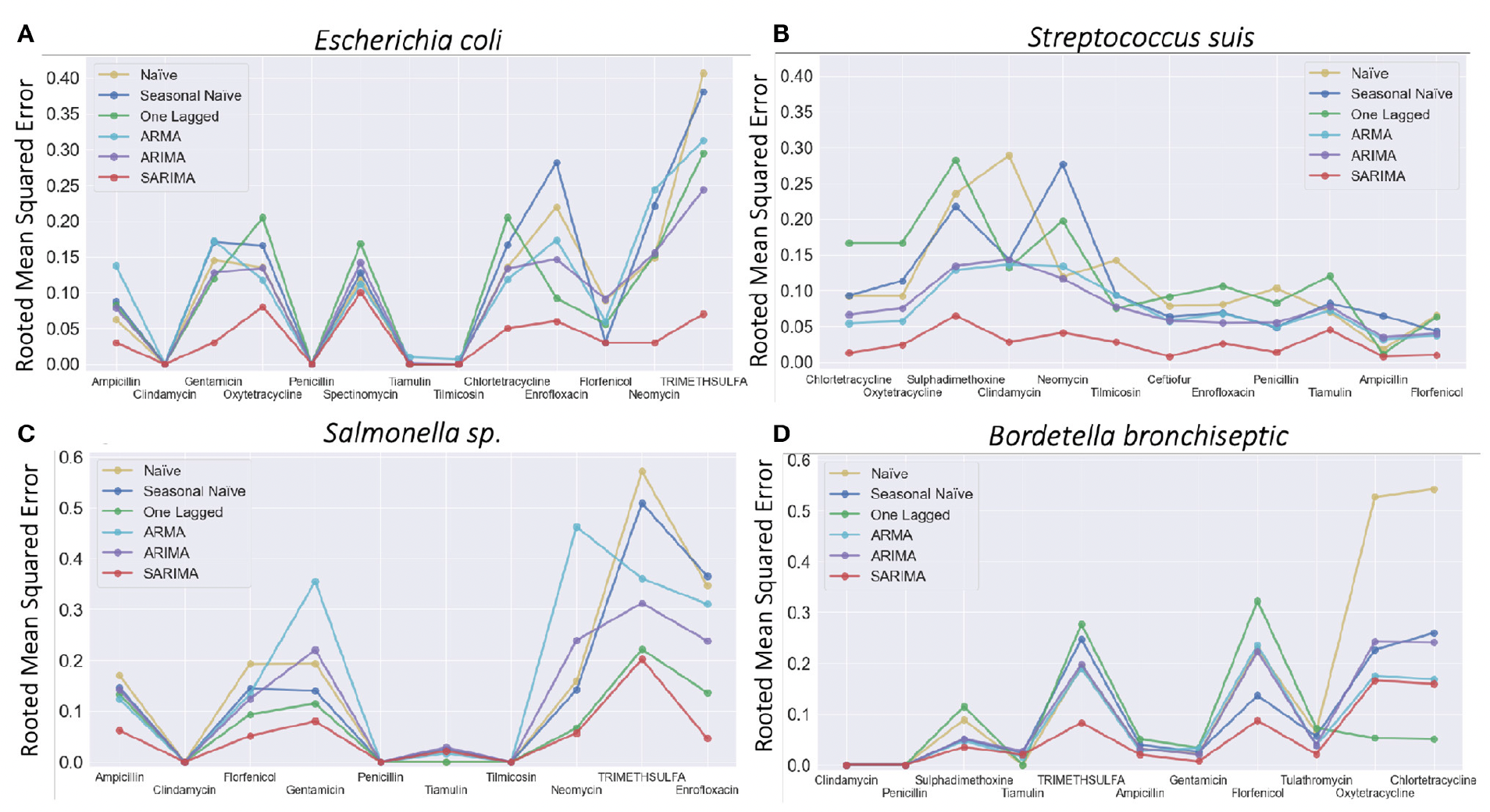
- Topic: Antimicrobial Resistance Forecasting
- Motivation: Routine AMR surveillance in food animal production is important but can be expensive and time-consuming (e.g., MIC testing). This work aims to forecast future AMR burden using historical susceptibility data to support earlier, better antimicrobial decisions.
- Research Question: Can time series models accurately predict future quarterly AMR proportions of common bacterial pathogens?
- Highlight: Using data from 600 US swine farms, we converted irregular S/R test results into quarterly AMR proportions and developed an ML model that provides accurate predictions on dynamic AMR series.
- Publication: Frontiers in Microbiology 2023.
|